If you have not read my story, here is a summary
It started with a stiff neck. It ended with me on the floor of my own Year 5 classroom, certain I was having a heart attack, on antidepressants I did not need, and out of the job I had done for twenty-eight years. All of it was my shoulder. Not my neck. Not my age. Not anxiety. And not one of the seven specialists I saw in three years worked it out.
March 2022. A small stiffness when I woke, gone by recess. Then it was there every week. I bought a new pillow, then an expensive down one, which was worse. By Christmas I had four pillows in the linen cupboard and a stiffness that would not go. Then the headaches. A band at the base of my skull, climbing over the morning. My GP took my blood pressure. Normal. Tension headaches, probably stress.
The dizziness started in October 2023. Last period, I reached for a textbook on the high shelf, turned my head, and the room tilted hard to the left. Mia Patterson, eleven, asked me if I was okay. I told her I had stood up too fast.
February 13th, 2024. My fourth family was a single dad thanking me for what I had done for his son. Four minutes in, my heart started beating very fast. Not nervous fast. Sprinting fast. Six hours in emergency. A cardiologist at 11:40pm: “Your heart is in excellent condition. This is almost certainly anxiety. Very common in women your age.” By June my husband Michael had moved into the spare room. In November I wrote a resignation letter.
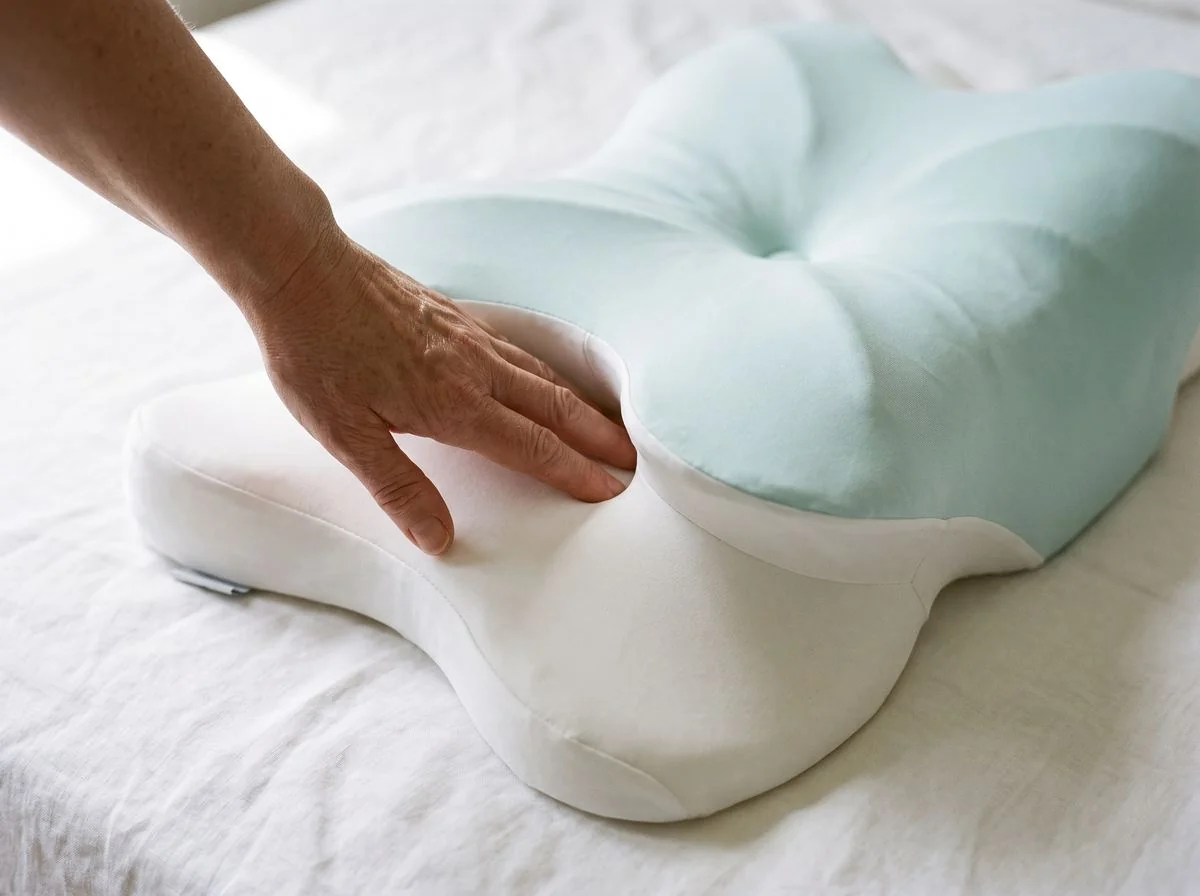
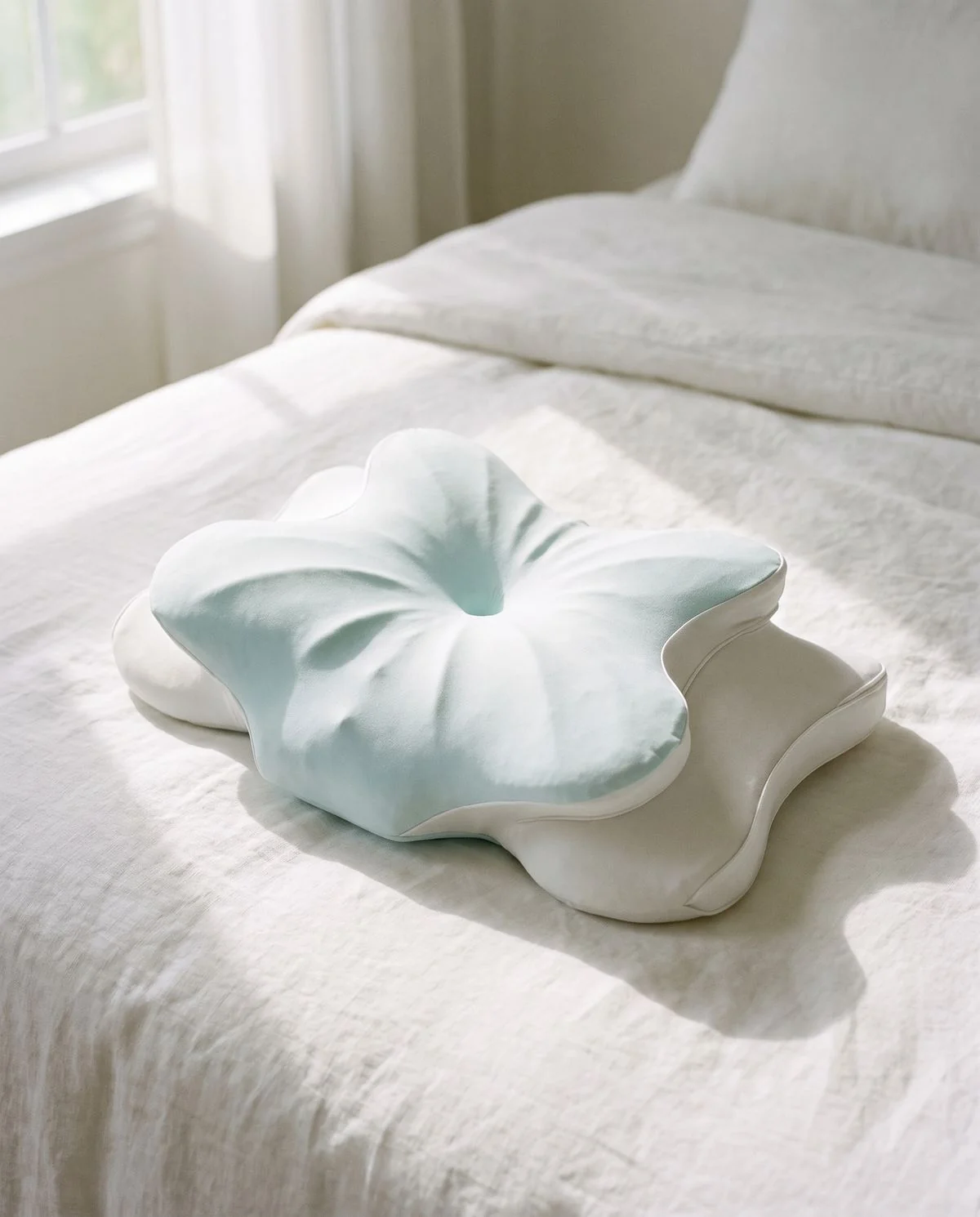
In late January 2025 my sister Catherine drove up with a printout about something called Shoulder Compression Syndrome. I flew to Sydney. The physiotherapist had me lie on her table on my left side and pressed the top of my left shoulder. The pain shot straight up the side of my neck and into the back of my head. The exact pain I had had for three years. She said: “Helen. Your shoulder needs somewhere to go. Every single night. That is the entire problem.” She told me to get a pillow with deep shoulder cut-outs. I bought one that night, on my phone.
She explained it like this:
“When you sleep on your side, your shoulder is the widest part of your body. Most pillows lift your head, but they do not make room for your shoulder. So it ends up pinned under the weight of your head and neck, pushing up into the side of your neck. For eight hours every night.
That compression refers pain into your upper back and the base of your skull, and eight hours of it a night keeps your nervous system in a stress response. Which is why side sleepers turn up, eventually, looking exactly like anxiety. Headaches. Dizziness. Racing heart.
In plain English: your shoulder has no room. Your neck is paying the bill. Your heart is filing the complaint.”
I sat on her table and started crying. She said: “Helen. Your shoulder needs somewhere to go. Every single night. That is the entire problem.” She told me to get a pillow with deep shoulder cut-outs. I bought one that night, on my phone.
It arrived on the Tuesday and I did not open the box. It was the humiliation: thirty-five months, and the answer was a pillow with a funny shape. On Saturday Michael opened it himself, pulled out this thing with its scooped-out sides, and said: “This looks ridiculous. Try it tonight.” I woke at 6:42am. My alarm was set for 6:15, and I had slept past it for the first time in over two years. I was on my left side, the side I had not been able to sleep on since the headaches started. My shoulder did not hurt. No band around my head, no fog. Michael came in at 7am with two cups of tea. He looked at me for a long time and said, very quietly: “Helen. Your face is different.” He moved back that night. By August I had not had a dizziness episode in six months, or a panic episode since Sydney. I have my life back.
If you are reading this.
If you sleep on your side and cannot sleep any other way. If you have headaches nobody can explain, dizziness the GP put down to stress, a racing heart they told you was anxiety. If you have a shoulder that aches in a way you have stopped mentioning. Please read the next part twice.
The problem might not be your age, or anxiety, or even your neck. It might be that your shoulder has nowhere to go for eight hours every single night.
There is a morning somewhere with your name on it. You do not get to pick the morning. You only get to pick what your shoulder is resting on when it arrives.
Helen Glover, Adelaide Hills